Delighted Seguro won in resounding fashion, but there is something particularly odious about a hardline anti-immigrant party winning the bulk of the emigrant vote. 
2 Likes
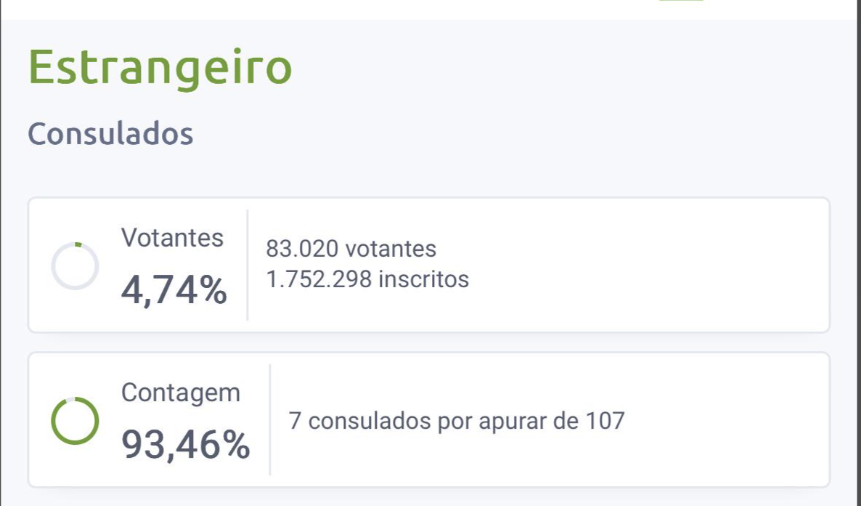
It is not an emigrant vote, but the vote of portuguese nationals abroad - “no estrangeiro”.
It is a bit ironic that Portuguese abroad vote for a party whose platform is anti-immigrant when they themselves are immigrants, who left for greener pastures. Perhaps unhappiness that they “had to leave”, ie forced out of their country. A vote for change, which Chega appeals to.
4 Likes
Quite a few of the brits living in places like Spain voted for Brexit, as did a chunk of immigrants (my Polish stepmother, for example).
Wasn’t it Churchill who said something like “Democracy is the worst form of government, except for the alternatives”?
7 Likes
The definition of “Brits living abroad” might be relevant. Those who were really full-time residents abroad, went to the High Court to fight for their right to vote in the Brexit referendum, and lost.
2 Likes
I thought this too, but the Expresso article about it mentions that the number of emigrants who vote is very small because you have to go to a consulate - vote by mail is not allowed. I wonder if the high Chega vote is a reflection of that - only the fanatics bother to go to the polls.
Yes, I also read the article. As it states, votes outside of Portugal are taken at a Consulate, and this naturally limits participation unless there is considerable motivation or concentration of Portuguese in the Consulate locations. I also sense that the Chega vote may be a reflection of motivation.
Shame that the second graphic is not numbers by location.
3 Likes
Anyone hear anything about this new AIMA potential call for a separate mandatory “in-person” verification of documents - and if you miss it, you could potentially have your residence permit cancelled?
[AIMA requests “new in-person document verification” - The Portugal News]
3 Likes
Thanks for sharing! I’ve asked my advisor if they have seen cases of this.
I’m actually heading to PT this week for my biometrics next week. If I learn anything in person I’ll certainly post.
At first read, I wondered if they changed some procedure with the process and are trying to get all applications (regardless of status) to be compliant with the new process?
I read what AIMA posted. This is unlikely in my opinion to affect GV applicants. It’s clearly targeting persons suspected of forging or digitally modifying aspects of their passport. This can be detected because border scans or tax data do not match what is being reported by the applicant, possibly because the applicant purports to be resident in Portugal but is suspected of actually living in France of Switzerland or travelling elsewhere. Because lawyers review and submit most GV applications I think it’s not going to result in those being reviewed unless they suspect a specific lawyer of application fraud.
You can drill down into the various countries here: https://www.presidenciais2026.mai.gov.pt/resultados/estrangeiro
The breakdown is interesting. Ventura’s wins were concentrated in a few countries: USA, Brasil, Luxembourg, Switzerland, France, Andorra, South Africa … I’m on a Portuguese in (one of those countries) FB page and the overwhelming view of themselves is as respectable, integrated, law-abiding, gainfully employed, tax-paying immigrants. They contrast this with “migrants”, who they view as being none of the above. Many see Ventura as a strongman who will stem this flow and return Portugal to respectability. Familiar rhetoric.
4 Likes
5 Likes
6 Likes
Thanks for this! Very interesting and it fills in a lot of background. I wonder which way the political winds might start to blow if more people like Manuela Aguiar speak up.
2 Likes
Those are the largest Portuguese communities outside Portugal, apart from UK and Germany. Ventura’s support outside Portugal is no great mystery. People often leave a country because they’re unhappy with the economic or bureaucratic status quo, so rightly or wrongly are more likely to be attracted to anti-establishment candidates who promise to fix it.
3 Likes
How in the good f■■■ is there no clarity still? 4.5 years and a lawsuit into this process and still waiting for some decision from this byzantine system. the returns from the fund are also far below even index funds.
2 Likes
Nationality law debate to resume on 1st April. 

Is it start of a debate or is it a vote? I get different response form different people/sources.
If it is a vote, then what are they going to vote on?
You can also go back in time to see the agenda on September 30 2025, the day that parliament approved the revised foreigners law (after the constitutional court struck it down previously). The April 1 2026 agenda and September 30 2025 agenda look basically the same.
Hopefully the revised nationality law either includes grandfathering, or if it doesn’t, PS at least fights harder and drags out the vote for longer than they did with the foreigners law.
4 Likes
Thanks @anonymous69. This is what I was looking for. Ofcourse I have gone thorough the agenda but I am not expert in parliamentary affairs.
Do we have any idea of when the updated family reunification law was made public before the vote? Or was it drafted after the vote? I am trying to understand when the new draft is made available for Parliament to review and vote?
It’s Time for Us to Act — Let’s Make Our Voices Heard
Many of us invested in Portugal’s ARI/Golden Visa program in good faith — trusting in a clear, predictable pathway that was presented not just as a legal framework, but as a commitment.
Today, that commitment is at risk.
The proposed changes to the Lei da Nacionalidade don’t just create uncertainty — they fundamentally alter the promise that brought us to Portugal in the first place. They threaten our timelines, our plans, and the deep personal and financial ties we’ve built with the country.
But this moment is not just about us. It’s about the future of Portugal.
Golden Visa investors have contributed billions of euros to Portugal’s economy — supporting development, jobs, innovation, access to healthcare, and local businesses. If the program becomes unpredictable or unattractive, those investments will simply go elsewhere.
And right now, the people who understand this best — real estate developers and fund managers — are largely silent.
That needs to change.
What We Can Do — Starting Now
One of the most effective strategies recommended by the PR team funded by our GoFundMe is to engage directly with the investment managers and developers who have benefited from ARI/Golden Visa capital and who stand to lose the most if future investment dries up.
If they hear from a handful of investors, nothing happens.
If they hear from hundreds of us, all at once, it creates urgency, attention, and pressure to act.
Our goals are simple:
-
Make Noise — Quickly and Collectively
Influence comes from visibility and momentum. A coordinated wave of outreach in a short period of time will have far more impact than isolated contacts spread over months. -
Gather Powerful Stories
Facts alone don’t change minds — stories do.
We need real examples of how ARI/Golden Visa investments have benefited Portugal, its communities, and its people. These stories will be critical in shaping media narratives and informing policymakers. -
Create Momentum
Many of us feel frustrated by the slow progress toward key priorities like:
- Grandfathering existing investors
- Starting the residency clock at application submission
Waiting will not change this. Collective action might.
How You Can Help (Takes 5 Minutes to Start)
- Identify the fund managers or developers you invested with.
- Use this template to create an email for each investment firm and send it to them as soon as possible, but no later than March 21st.
- Send an email to SJC-Portugal@googlegroups.com stating: I sent an email to [name of recipient] at [name of investment firm] on [date].
If you get an answer, send another email to SJC-Portugal@googlegroups.com summarizing the response.
There are many people in this thread. What if we could get 200-300 emails out next week, asking for help on this issue?
The Most Important Point
This is not the time for endless debate about tactics.
It’s time to act.
Every major advocacy effort succeeds because ordinary people decide that staying silent is no longer an option.
We have a shared interest, a shared voice, and a narrow window to use it.
Let’s make sure it’s heard.
I’m ready to help organize this effort — and I hope many of you will join in.
5 Likes